“July 2006: This is the year when mLAN FireWire Music Networking breaks loose!” Yamaha proudly proclaims on the mLAN Central website! Woo-hoo! Break it loose! Shake it down! mLAN, baby!
Uh, okay, here’s why I’m skeptical about this. mLAN is a perfectly reasonable, FireWire-based technology for interconnecting audio devices, and it does work on a handful of Yamaha pieces. But Yamaha has long claimed that mLAN would become a new industry standard format, embraced by other manufacturers. Sounds great — except, years into the mLAN format, that hasn’t happened. There’s a semi-impressive list of partner companies supposedly working on mLAN on Yamaha’s partners page. Semi-impressive because some of them (eMagic) don’t even exist any more. But good luck trying to dig up actual products on this already-modest list. While I was researching my book, I tried calling Yamaha, Korg, and Tascam, just to get them to name one product they make that uses mLAN. Korg and Tascam said, “Isn’t that a Yamaha format? You’d have to talk to them.” At best, it sounded like maybe you could get an optional expansion board. For something. Yamaha wasn’t much help, either, beyond their own gear. There are a handful of pieces of hardware out there, but it’s a tiny fraction of the overall sound market. But, of course, 2006 is going to be the year, so maybe at NAMM next week in Austin the floodgates will open and mLAN will be the hot — okay, I’m not kidding anyone here.
That said, you can now download drivers for your Yamaha-branded mLAN gear with Universal Binary support for Intel Macs, and — wait a minute. What’s this? The list of even Yamaha mLAN gear is getting shorter, because Yamaha has declared a number of its own mLAN products “legacy.” They’ll be happy to help you upgrade via a page entitled mLAN Loyalty.
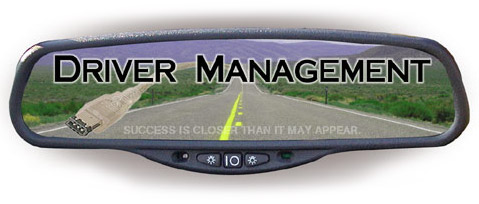
I enjoy the picture, though. I think this person is driving through the Valley of Forgotten Technologies.
I’ve been proven many times wrong before, so if someone can explain to me what makes mLAN useful beyond a couple of pieces of Yamaha hardware that haven’t been redubbed “legacy,” I’d love to hear it. Knowing how these things go, I’ll probably shoot out my mouth only to have one of the mLAN engineers show up in comments. In the meantime, this one goes in the X-Files, for “did we ever really believe that was going to catch on”?
There, in the far distance of that rear-view mirror, is mLAN being left far behind me…..
I struggled with it for a year… I bought a Motif ES6 (with mLAN expansion card), and an 01X, marveled at all the (missing) potential, tried hard to fall in love, wrestled continuously with high-latency drivers and CPU spikes, buggy management software and the dreaded Studio Manager, and at last divorced it completely….
I still think it has the *potential* to be a phenomenal system. In the most understated terms possible however: It still needs work. Is there more to say?
If a company like Apple embraced it (since it does use Apple's licensed firewire technology, after all), & helped polish the UI and functions, and a company like MOTU got involved, and refined those drivers into spike-less, 3ms-latency dream machines (like their own firewire interfaces provide), I would certainly consider a return to the fold.
Until that time, I am back on the road whisking along happily with good old "standard" firewire and midi. Chances are, I will never look back.
One never knows, however…. let's see what 2006 really brings….. I could be pleasantly surprised…. *ahem*
peace,
tribalogical
That's kind of funny, considering Korg has made an mLan expansion board for the Triton and Triton Studio….
Well, but there's an excellent example … how Korg owners are really going to shell out $600 for an mLAN connection?
And we'll see if they have any surprises, I suppose.
I was really jazzed up about this years ago. It was supposed to be part of Mac OS X, at that time, a revolutionary new OS. I can't tell you why, but ball dropping seems to have happened… In fact, I recall laughing at Gibson MAGIC digital guitar – vs a standard like mLAN.
The gist of it was routing MIDI & Audio over firewire was cool. Yet, the work involved was the same as Audio-over-IEEE1394 – and did not require a license, or fee, or per unit sold, sent to Yamaha. Later Yamaha also dispenced with a fee to see the spec, and some free licensing, but I think all had to donate to the cause.
Then M Audio, and others just used the Audio-over IEEE1394 from TI, MOT, IBM, etc. and cost was a huge factor, leaving Yamaha in charge of a standard looking for an excuse to exist, and expensive licensing ( If you buy a $99 or even $499 box – the dozens of companies wanting small cuts are insane – )
Ultimately, if you can get Audio & MIDI into Firewire, which may not even be a ubiquitous standard ( USB 2 has ironed out some of the timing issues & has no fee to license – hence it's popularity ) then what benefit is there to using a standard held by some corporation? If they did sort out all incompatibilities, and already had it on most of the devices in a studio – it would be worth it to let them deal with any problems….but that is not the case, and I've heard horrors getting a max 8 audio streams through mLan – when others MOTU, Presonus, Emagic, M-Audio, had 18 channels of audio working well…. mLan maxed out at 8 channels….(!)
I had high hopes for this, like an OMS standard for the next 25 years…. but failure on a number of fronts, seemingly zero developers, zero dollars, zero reasons to use it, it is now even less likely….
From everything I have learned about Music gear industry, it costs a lot to make a standard, and when you count income from them, it's tough to justify expenses with no clear income. Now if a chip seller has a complete solution, licensed, say like Wolfson MP3 codec/chip, at a complete cost less than rolling your own, then if you keep prices low, it will sell… inventing a standard to license to get rich, makes CFO's from companies you hope to use this product, far more likely to invent their own, and let others freely use it…. open standards are around for a reason….
I share your skepticism, and hope it's really taking off again this year…
Well, I suppose there isn't much to argue in this article, or rather observation, or critique… or, I'm not really sure what it is. But I'll take a moment just to share my thoughts, if just to be informative.
Well, to be certain, mLAN… or rather what mLAN is attempting to do, is really where things are going. It's unavoidable, an evolutionary step. mLAN is what its name implies… networking software for digital music. This is really how it differs from proprietary drivers for the various firewire or USB solutions that are on the market. I don't know if ultimately mLAN will be the networking standard of choice, or if it will be some other format… but for sure it is coming.
Devices equipped with mLAN run all their audio and MID data along a single firewire cable. This makes for just the neatest, quiet, all digital studio environment you can imagine. No thicket of MIDI, analogue, lightpipe, BNC, TDIF, S/PDIF etc. cables running all over the floor and out the back of your racks. No pulling racks from the wall with a flash light under your chin. No patchbays and soldering guns. Just a single firewire cable running to each device in your studio upon which all data travels.
And when you need to change the I/O or signal path in some manner you just do it graphically via software. You launch the graphic patchbay and you increase or reduce I/O, route this or that "virtual cable" here or there with the mouse on your computer. When you're satisfied with your creation, you click apply and all signals are immediately re-routed. You never leave your cozy seat. And every fantastic template or configuration you've dreamed up can be saved to a file and recalled as simply as you'd open a word document or jpeg of your trip to Tunisia.
Fantastic really. And Yamaha, although having stumbled here and there in getting their colleagues and competitors to adopt mLAN, offers mLAN on some really great pieces of hardware in their own stable. The Motif ES, the i88x, 01X, and really any of their high end mixers via an mLAN I/O card. Certainly a nice collection of products to create music with.
Realizing, that at this stage of development there are far too many existing devices with ADAT, S/PDIF, TDIF, etc… all of these mLAN capable products also have some other way to get Audio and MIDI in and out of them. The beauty is that once your wall of hardware synths is MIDI'd and analogue'd up to your mLAN network, their signals can also be routed via the Graphic Patchbay via the mLAN device they were plugged into.
I have been working with mLAN (I own an 01X and i88x) since about August of 2004. I am so impressed with what this technology represents that I can't help but feel compelled to get other people interested in it. This post is getting far too long as it is, and I really can't express everything mLAN is capable of in a few paragraphs. For more information please read up at:
http://yamahasynth.com/products/mlan/index.html
And visit us at:
http://www.01Xray.com
At this time, mLAN is supported much more fully on XP than on OSX, and we are pressing both Yamaha and Apple to rectify this ASAP.
Just for your interest. Yamaha (now owners of Steinberg) are working on an initiative called "studio connections". This too is an evolutionary idea where all settings to virtual and hardware devices are saved and recalled to/from a single file. Of course they are most interested in Cubase, Nuendo, and Steinberg's other products. But we are already seeing this concept appear in all of the major DAWs. I bring this up here if only because I find it fascinating, and also, a technology like studio connections/total recall really shines in an mLAN environment. Please, check it out.
http://www.studioconnections.org/
No, I don't work for Yamaha. 😉
EJF
'There’s a semi-impressive list of partner companies supposedly working on mLAN on Yamaha’s partners page. Semi-impressive because some of them (eMagic) don’t even exist any more.'
The reason why the list of partnet companies 'supposedly' working on mLAN products is only 'semi-impressive' is because 'eMagic' doesn't exist any more?
Can I get a rewind?
There is an impressive list of companies working on mLAN products, but Mr Kim doesn't find the list impressive because one of those companies has been bought by another of those companies . . . ?
Mr Kim's post contains a lot of his personal bias disguised as fact – hopefully he's not 'kidding anyone' here.
The list of mLAN devices is not 'getting shorter' simply because a couple of first generation mLAN devise have long been superceded by newer models, and Yamaha is offering a loyalty programme.
Yes, mLAN on Mac OSX needs more work, yes you can get by without mLAB – like people got by with parallel ports despite USV having been around a few years – a standard audio over FireWire interface (many of which use Yamaha-developed protocl, an early incarnation of mLAN) but even if mLAN doesn't get there, something very similar will, because mLAN isn't just peer-to-peer connectivity. As Elmer stated, mLAN is complete audio/MIDI networking between mLAN-equipped devices, and even if the implementation isn't yet ideal (driver issues) only the most backward-looking would argue that mLAN isn't conecptually the future of audio interfacing.
I've been working with mLAN for a while now on the o1x.
Works fine for me thanks. The power and the control rock, both in the live environment and the studio.
Wether or not mLAN lives or dies is STILL up for debate. If it does i'll move on elsewhere – through necesity rather than choice.
A great protocol, a tight community.
Oh yeah, and so this article is trying to say that Yamaha have gone the wrong way and as for Egan's comments… who the heck did you talk to? I regularly have 16 channels of audio running no problems. Stop bringing innacuracies to the party.
And comments regarding MOTU and others being the saviours of things?? hahah hahah these are companies that create audio cards, and you're telling me they differ from everyone else? Nonsense – bet ya bottom dollar that they have there detractors just like everyone else.
And finally
The pound is stronger than the dollar….
HOLLA!
Thanks to Elmer and others for shedding some more light on this subject; I really do appreciate it.
Here's the deal:
Those of us who write about technology and use technology have all kinds of personal biases and skepticism about technologies. We can either disguise them and repeat what marketing people tell us (I don't think anyone wants that), or we can be upfront about those biases and invite people to prove us wrong.
I was NOT kidding when I said I wanted to be proven wrong. I love being proven wrong; it's generally when I learn the most. And I don't think I'm alone in this biases, either, so might as well voice them and we can all learn something.
It's great to hear some people out there for whom Studio Connections and mLAN-based studios (all of which sound like they're centered primarily around Yamaha equipment) are working.
I'm still a little skeptical about Yamaha's outreach to other companies. But I'm not blaming Yamaha on this; the market right now is littered with a) old standards that are insufficient in many ways but are widely-adopted as a lowest common denominator and b) attempts at new standards that aren't widely adopted yet to move beyond a limited range of hardware (or, in the worst case scenario, off paper, so I give Yamaha credit there where it's due).
I still say the products list on mLAN is too short, and so far all we've been able to add to it is a $500 expansion board for the Korg Triton and a few Yamaha models. Nothing wrong with that; it's perfectly possible to build a superb studio with Yamaha and Steinberg kit. It's just not quite what the marketing is saying. Of course, the fact that there is an Intel-universal binary of the drivers does demonstrate that Yamaha is committed to the platform. I guess the primary question is, will they be able to get anyone else onboard, or is there any progress from anyone else. (If mLAN really is the only game in town, then we can afford to wait until the industry comes around to it.)
As for this: "only the most backward-looking would argue that mLAN isn’t conecptually the future of audio interfacing." Well, if we're talking about integrating control and audio over high-speed interfaces, sure, sounds like the future to me, but that's fairly broad. But it doesn't really matter what I think; it matters what the manufacturers think. And other than Yamaha, it's very difficult to get any clear message on how hardware will move toward this kind of future. So, yes, absolutely, credit where it's due to Yamaha for trying something.
Anyway, there's so little information on mLAN on the Web that I fear this story may rise in Google ranking, so I'm off to talk to my contacts at Yamaha and elsewhere to get some solid information on this so people get that when they Google rather than my rants. But I'm just as glad to know honestly what people out there are *actually* using, beyond what manufacturers *think* we are.
Thanks for keeping up with the comments on your site, Peter, and also for acknowledging that you're not an authority on the subject of mLAN. I’m a little disappointed with the tone of your article in general because it lacks well-researched detail, but hey, we’ll all live. J
I think the issue here is predominantly that our focus is different. You seem to be concerned with whether or not mLAN is going to take off as a new standard with the entire industry replacing audio and MIDI ports on their products in favor of the one firewire cable solution + mLAN. I would love to see it happen, but you know as well as I do that a transition like that takes years.
mLAN would have to be adopted as a standard slowly, much in the manner that lightpipe creeped its way into everyone's studio via Alesis's ADAT. ADAT’s 8 channels of digital audio (with no ground loops) up to 10 meters (33 feet) away from your rack was revolutionary for its time, but it is not all that impressive today. Not in comparison to what firewire and mLAN are capable of. And once again, I have to point out that mLAN patching is entirely configurable via software. By way of the graphic patchbay, all I/O routing is customizable, savable, and recallable.
Anyway, the point I am trying to make here is that Yamaha is a pretty big company and they can afford not only the R&D to put out this kind of stuff, but also to wait longer for a return on their investment. In the long run, we will have audio MIDI networking on all or most devices, the question is, "will it be mLAN as we know it today?". Either way, the groundwork is laid in devices like the 01X, i88x, Motif ES, and mLAN I/O cards.
Right now it looks like Yamaha and their competitors are looking at Dice II:
http://sonicstate.com/news/shownews.cfm?newsid=29…
And it is likely we will see Yamaha expanding on mLAN with work on Open Generic Transport. Read up on it here:
http://linuxaudio.org/en/press/lud53-Audio_Libre….
Thanks for the opportunity to clarify things and counter some arguments.
EJF
"The list of even Yamaha mLAN gear is getting shorter, because Yamaha has declared a number of its own mLAN products “legacy.�"
I found a thread that lists nearly 50 products that are mlan compatible:
http://www.gearslutz.com/board/showthread.php?t=4…
The mlancentral.com website is terribly uninformative. Strangely, you'd have to go elsewhere to find any useful info.
I bought an mLan8e card to put in my Yamah S80 keyboard. By the time I got it installed (by an authorized service center) the mLan8e card had been declared "legacy". I sadly went to sign-up for the legacy upgrade program – but never heard a fuckin' word from Yamaha. I ended up donating the synth and card to a local charity and have since purchased a M-Audio Oxygen. Fuck Yamaha and fuck mLan!
mLAN A, S200 devices, are now legacy. It took Yamaha far too long to establish firmware updates that would allow these devices to work with mLAN B S400. It is a shame that guys like gordon were confronted with this. However, I am certain if gordon had persisted and called Yamaha they would have followed through with whatever is promised in the mLAN loyalty program. Of course, by this time, I am sure the taste in gordon's mouth was so bad, he would never want to deal with it again. Understandable.
Establishing standards in the music is hard because there is no clear leader and everybody is afraid of helping someone else's bottom line. VST and ASIO took off like wildfire (relatively) because they were software only, but mLAN requires hardware engineering and I bet its not simple.
I installed the Studio Connection OPT thing in Nuendo with a Motif and it still didn't work and I spent a LONG time with it and suddenly my system became 1000% more stable when I uninstalled it. But oh how I CRAVE this to work and people to adopt this standard cuz I HATE cables and screwing with cables and labeling cables and also the cables, I hate them. Also I want the total recall I get with softsynth with hardware. Seems like we should have had that a long time ago.
Yamaha did the R&D and walked away and made it open to anybody. I have talked to project managers for Yamaha and Steinberg and this is what they all talk about, this is what they are excited about, still. And god bless SOMEBODY for giving a hoot about improving on the MIDI/TDIF/ADAT/SMUX mess we have now. And if you want to imagine the inertia of this industry just think MIDI. I mean, except for cocaine, what else from the 80's are we still using?
I think the only real mistake they may have made was choosing Firewire instead of Ethernet. While I can understand Peter's cynicism and time may prove him right, I hope he is wrong and that some MIDI/AUDIO/LAN standard get adopted. And then we need to revamp, or recreate the MIDI standard so it fits the times as well.
could there not be a mLan to Ethernet Convertor device. even mLan to 802.11x.
i think mLan needs to be a Public Standard to to be successful..
midi over ethernet
4 Feb 2003 The Institute of Electrical and Electronics Engineers Standards Association (IEEE-SA) has begun work on a standard to extend the reach of musical instrument digital interfaces (MIDI) by allowing for MIDI transmission over Ethernet and IEEE 802.11 (TM) networks. This promises to give those in the music field significant new creative possibilities for composition and performance.
The new standard, IEEE P1639 (TM), "Standard for Transmission of Musical Instrument Digital Interface (MIDI) Data within Local Area Networks: Distributed MIDI – DMIDI," should be finalized by the end of 2003. It will retain backwards compatibility with existing hardware and software under the original MIDI specification, which is now 20 years old.
http://standards.ieee.org/announcements/p1639app…. http://www.midi.org/about-midi/ethernet.shtml http://openmuse.org/transport/mip_intro.html
Hi,
I have a complete mlan setup MOES8, DM1000V2, I88X, all connected together by MLAN. More, i also use SX3 with studiomanager. I have to tell you that i am VERY happy with the system. It works just great! Graphic patchbay enables me to rewire my system very flexibel. I know there are some instability issues that come up if you continue switch mlan on/off and load and reload applications and all that on a fully loaded PC! But that is just the case! Start you music-only PC in the morning, start the mlan, get SX3 up and running for the rest of the day. You'll see that this is a stable system… At least mine is!
It is a pitty that no more manufacturers jump on the mlan train. I'm sure if more companies should start implementing mlan interfaces into their equipment, yamaha should put more effort in designing their drivers and management software…
Let's hope for the future…
I have had a Yamaha 01X for almost a year now. I have a well spec'd audio tweaked PC. I have spent hours trying different installations, drivers, hotfixes, registry fixes, BIOS fixes, reinstalling windows… nothing but crashes and instability. Even with 8ch 16-bit/44.1KHz. Clearly this hasn't worked for me!
My last ditch effort is a new PCI firewire card that has been deemed officially 'compatible' by Yamaha. I will be reinstalling windows and attempting one last ditch effort with the mLAN drivers.
Failing that, there's always eBay.
The future never arrived, did it?
Yes, MLAN was the inevitable evolutionary extension of MIDI … but Yamaha screwed over the mLAN enthusiasts by delaying the Windows drivers so long that we ran out of enthusiasm, then they alienated major companies like Roland and MOTU, so that MOTU ended up developing their own proprietary drivers, and Roland ended up putting their driver development resources into USB2.0 rather than Firewire.
By staking their claim to the Windows mLAN driver Yamaha deterred the open-source projects that could probably have done a better job, by delaying the launch until they had a product that needed it, they made it clear to the other manufacturers that under Yamaha's stewardship of the project, things would be run according to what Yamaha wanted, rather than what the industry needed. By refusing to share "prorietary" details of how their driver worked with the Linux community, they made sure that the remaining group of enthusiasts who would have developed mLAN interfacing drivers for free, felt blocked.
The Linux guys would have loved to implement mLAN, but when the custodian of the Windows drivers and the main major manufacturer producing hardware refuses to release specs on the grounds that they're priprietary and governed by non-disclosure agreements, well … that kinda dampens your enthusiasm, doesn't it?
Yes, the mLAN concept was brilliant, and should have made life dramatically easier for small software and hardware producers, and for musicians. But when Yamaha "adopted" the Windows part of the project and made it clear that they regarded it as Yamaha's special property, they effectively destroyed it as a universal standard.
The musical instrument industry ==needed== mLAN – mLAN was supposed to be the "magic bullet" that shielded us and our customers from the vagaries of supporting drivers for shifting operating systems and driver models. We'd simply develop stuff to work with mLAN and it'd work everywhere. From a customer POV, mLAN was supposed to take the risk out of buying music hardware – everything would work with everything else, and you could keep buying gear more from other manufacturers to add to your collection without worrying about how to make it work. Repeat sales = cashflow.
Without an extensible networking system for music hardware, people stopped buying additional gear and switched their additional disposable income to more expandable hobbies, like computer gaming and iPods, small manufactuers went bust, music shops went bust, and the remaining manufacturers lost their appetite for developing new forward-looking standards, and fell back on producing smaller, more stand-alone USB-equipped items.
Yamaha screwed things up for everybody.